If you are looking for acreage in Springhill, lot size is only part of the story. In this part of Gallatin County, the real value often comes down to recorded development rights, rural utility realities, and whether a parcel truly supports the way you want to use it. If you want land for privacy, horses, a barn, or a long-term legacy hold, this guide will help you understand what matters most before you buy. Let’s dive in.
Why Springhill feels different
Springhill is not just another acreage market outside Bozeman. It is a special Gallatin County zoning district created to preserve agricultural land, rural character, scenic open space, water quality, and a limited-service rural setting, according to the Springhill zoning regulations.
That purpose shapes the buying experience in a very real way. You are not simply evaluating a home site or a few acres. You are evaluating how a parcel fits within a rural preservation framework that prioritizes agriculture, open land, and lower-intensity development.
What counts as acreage or a small ranch
In Springhill, the Agricultural and Rural Residential, or AR, sub-district is the main area most acreage buyers focus on. The regulations state that agriculture is intended to be the principal use, and allowed uses include single-family dwellings tied to parcel history, along with barns, corrals, agricultural structures, and on-premise sales of products, as outlined in the Springhill district code.
That means many of the properties buyers picture when they think of a small ranch can fit here. You may find parcels that support livestock, pasture, outbuildings, and a home, but the specifics depend heavily on the parcel’s recorded history and development rights.
Parcel history matters as much as acreage
One of the biggest misconceptions with rural land is that more acres automatically means more building flexibility. In Springhill, development rights are tied to recorded parcels, and the code gives one development right for parcels of 160 acres or less that existed at the time of adoption, plus one additional right for each 80 acres, as described in the district regulations.
This is why title work, surveys, and plat history are so important. Two parcels with similar size and views may not offer the same future options if their legal history is different.
Springhill is built around preservation
The larger zoning structure reinforces that rural feel. In addition to the AR sub-district, Springhill includes a Public Lands sub-district focused on preserving forest lands, wildlife habitat, recreation, forestry, and grazing, while the Community Facilities and Institutions sub-district covers uses like schools, fire stations, and cemeteries, according to the county regulations.
For you as a buyer, that means Springhill is best understood as a rural preservation area rather than a suburban growth corridor. If you value open space, agricultural compatibility, and a more legacy-style setting, that can be a major draw.
What to know before buying land
A beautiful parcel can still come with practical limitations. In Springhill, some of the most important buying questions have less to do with aesthetics and more to do with buildability, access, and utility support.
Start with the sub-district and rights
Before falling in love with a property, confirm what sub-district it sits in and what development rights are attached to the recorded parcel. The regulations note that development rights exist only in the AR sub-district and cannot be transferred to another sub-district, based on the Springhill zoning document.
This is one of the first questions worth answering because it shapes what you may be able to build now and what flexibility may exist later. It is also a reminder that acreage value in Springhill is not measured by land area alone.
Buildability is not automatic
Even if a parcel looks usable, that does not mean the county has confirmed it can be built on exactly as you intend. Gallatin County’s subdivision exemption instructions state that review does not verify legal or physical access, fire-protection water supply, floodplain hazards, water quality, wastewater treatment, or buildability.
That makes early due diligence essential. If you are planning a home, guest structure, barn, horse setup, or future improvements, it helps to verify those assumptions before you get too far into the process.
Access, setbacks, and site design
Rural land can offer more freedom, but it also comes with siting rules that directly affect how a property functions. In Springhill, setbacks are a major part of the conversation.
Road and stream setbacks shape the homesite
In the AR sub-district, structures must be set back 50 feet from property lines. They also must be 125 feet from the centerline of Springhill Road, Springhill Community Road, Walker Road, Forswall Road, Gee Norman Road, and Corbly Gulch Road, and 80 feet from the centerline of other public roads, according to the Springhill regulations.
There is also a water-related setback to consider. Structures unrelated to water procurement must stay 50 feet from the high-water mark of any stream or creek. If you are imagining a particular building envelope, view corridor, or barn placement, these rules can have a big impact.
Design standards also matter
Buyers sometimes assume rural zoning means fewer design considerations, but that is not the case here. The county states that purchasers and developers should carefully review the Springhill design manual, and the regulations include design and siting rules for dwellings, accessory buildings, lighting, signs, septic location, and building height in the Springhill district materials.
For a custom build or remodel, those standards are worth reviewing early. They can influence everything from where you place improvements to how the finished property fits into the surrounding landscape.
Wells, septic, and water rights
For many Springhill buyers, utilities are one of the biggest differences from in-town ownership. Rural property often relies on systems you need to understand and maintain yourself.
Private well and septic due diligence is central
A Gallatin County water-quality handout notes that more than 15,000 county households rely on a private well and septic system, and the county growth policy says residents rely more on groundwater than surface water, according to the county water quality information.
That makes private well and septic review a core part of buying acreage in Springhill. You want to understand the system in place, site conditions, maintenance history, and what may be required if you plan to build or expand.
Septic review should happen early
The Gallatin City-County Health Department says a local wastewater treatment system permit is required before installation, and a site evaluation must be completed by a registered site evaluator or Montana professional engineer, based on the wastewater and septic guidance. Springhill regulations also state that septic must be on suitable soils and that a permit must be issued or applied for before a land-use permit, as noted in the district code.
In practical terms, septic is not something to leave for the end of your due diligence period. If the property’s intended use depends on new or expanded wastewater treatment, that question needs attention from the start.
Water rights can be separate
Domestic water service and water rights are not always the same thing. Gallatin County’s land-use permit instructions note that water rights from the Montana Department of Natural Resources and Conservation may be needed, along with supporting documentation for septic, right-of-way improvements, fire-district approvals, building permits, stormwater permits, and approvals from HOAs or covenants when applicable.
If you are buying land for irrigation, livestock, or future improvements, this is an area where detailed review matters. It is another reason Springhill purchases often benefit from a careful, step-by-step approach.
Barns, horses, and outbuildings
For many buyers, the appeal of Springhill is the ability to create a property that works for daily rural living. That might mean a barn, corrals, fencing, a shop, or horse setup.
Springhill supports many ranch-style uses
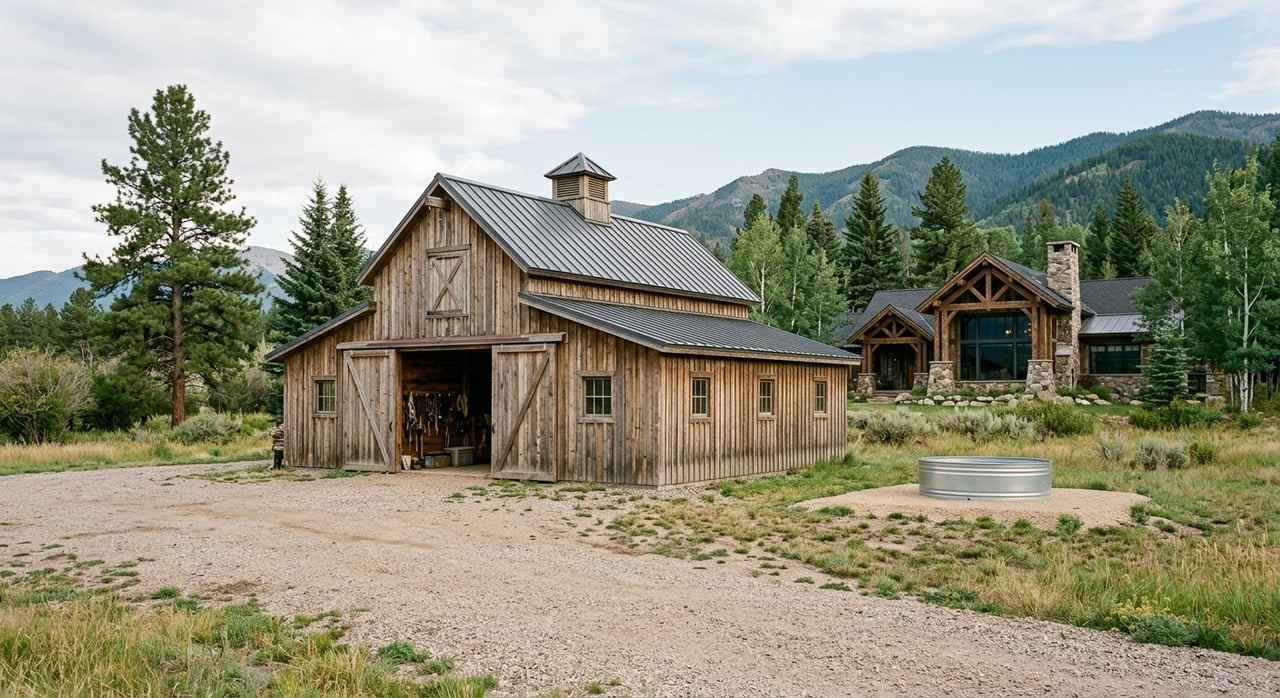
The AR regulations allow barns, corrals, pasture, range lands, livestock uses, and other agricultural structures, according to the Springhill zoning code. Fences also do not require a land-use permit in the district, which can be helpful for horse and livestock-oriented properties.
That said, not every outbuilding is automatically approved just because the parcel is rural. The code explains that accessory status depends on there being a principal structure or use on the parcel, and some accessory uses may still require conditional approval.
The practical question is how the parcel works
For horse buyers in particular, the issue is often less about whether horses are conceptually allowed and more about whether the property is functional. Access, setbacks, well capacity, septic suitability, and the layout of the building envelope all matter.
A parcel may look ideal on paper but still be less practical if the siting options are tight or utility support is limited. This is where detailed property-level review becomes especially valuable.
Expect normal agricultural impacts
One of the best ways to decide whether Springhill is right for you is to be honest about the realities of rural living. The district requires an agricultural nuisance acknowledgment for certain land-use applications, and it specifically notes that noise, odors, dust, machinery, manure handling, and fertilizer or pesticide use can be normal conditions of the area, according to the Springhill regulations.
For many buyers, that is part of the appeal. If you are seeking open land and an agricultural setting, it helps to understand that those conditions are not exceptions. They are part of how the area functions.
Can you subdivide later?
Some buyers view acreage as a long-term hold and wonder whether future division might be an option. In Springhill, that deserves careful scrutiny.
Subdivision of parcels for residential development is a conditional use rather than a matter-of-right action, according to the Springhill district code. The regulations also note that parcels created for agriculture or open space can be tied to covenants that prohibit structures requiring human-consumption water or sewage facilities.
If future flexibility is important to you, this is not a detail to gloss over. It is worth evaluating before purchase, not after.
A smart Springhill buyer checklist
If you are considering acreage or a small ranch in Springhill, these are some of the most important questions to ask early:
- What sub-district is the parcel in?
- What recorded development rights come with the property?
- Is the parcel buildable for your intended use?
- What are the road, property-line, and stream setbacks?
- How will well and septic needs be addressed?
- Are water rights relevant to your plans?
- Are barns, corrals, or accessory buildings permitted as proposed?
- Is there legal and practical access year-round?
- Do any covenants, design rules, or permit requirements affect your plans?
- If long-term flexibility matters, what limits might apply to future subdivision?
The county’s Springhill planning page is a useful starting point because it brings together the zoning map, development plan, and design manual in one place.
Why local guidance matters
Acreage in Springhill can be incredibly rewarding when the property lines up with how you actually want to live. But these purchases often involve more moving parts than an in-town home, especially when you are evaluating land use, access, water, septic, setbacks, and long-term options.
That is where local, property-specific guidance can make a real difference. If you are comparing Springhill parcels or trying to understand whether a small ranch property fits your goals, Brad Ehrnman Real Estate can help you take a practical, informed approach.
FAQs
What makes Springhill acreage different from other land near Bozeman?
- Springhill is governed by a special zoning district designed to preserve agricultural land, rural character, open space, water quality, and a limited-service rural setting, so parcel history and land-use rules matter as much as acreage.
What should buyers check first on a Springhill small ranch property?
- Start by confirming the parcel’s sub-district, recorded development rights, setbacks, access, and whether the property can support your intended use with well and septic systems.
Are horses allowed on acreage in Springhill?
- Springhill regulations support agricultural uses that include livestock, pasture, barns, corrals, and fencing, but the parcel still needs workable access, setbacks, and utility support for your plans.
Can you build a barn or outbuilding on Springhill land?
- Barns, corrals, and agricultural structures are generally allowed in the AR sub-district, but accessory-building rules, principal-use requirements, and possible permit needs should be reviewed for the specific parcel.
Do Springhill properties usually have private wells and septic systems?
- Many rural Gallatin County properties rely on private wells and septic systems, so buyers should review permits, site conditions, maintenance needs, and any expansion limits early in due diligence.
Can a Springhill acreage parcel be subdivided later?
- Residential subdivision in Springhill is a conditional use rather than an automatic right, and some parcels may also be subject to restrictions tied to agriculture or open-space purposes.