Looking for more space without feeling cut off from Bozeman? That is the appeal of Springhill. If you want a property with a country setting, room to breathe, and a stronger connection to land and open views, Springhill stands out for good reason. This guide will help you understand what makes the area different, what kinds of properties you are likely to find, and what to look at before you buy. Let’s dive in.
Why Springhill Feels Different
Springhill is a small census-designated place in Gallatin County with 120 residents and 64 housing units recorded in the 2020 Census. That alone gives you a sense of scale. This is not a typical neighborhood pattern with blocks of homes and frequent commercial services.
Instead, Springhill functions more like a rural edge community north of Bozeman along Springhill Road, with access off I-90 Exit 305. You are still tied to the Bozeman area for work, shopping, dining, and daily services, but the setting feels distinctly more open and agricultural.
Gallatin County’s Springhill zoning regulations help explain why. The district is intended to preserve agricultural lands, rural character, scenic open space, and limited services. In practical terms, that means Springhill has held onto a quieter, lower-density feel that many buyers are actively looking for.
What Country Living Means Here
In Springhill, “country living” is not just a marketing phrase. The local zoning framework is built around agriculture, rural homesites, and open land rather than conventional subdivision growth. If you are comparing Springhill to in-town Bozeman or newer suburban-style neighborhoods, the difference is noticeable.
The main subdistricts shown on the official zoning map are AR, PL, and CFI. Those designations shape how land is used and reinforce the area’s parcel-by-parcel pattern, with conservation easements, road corridors, and water features all playing a role.
For many buyers, that translates to a setting where privacy, views, and land use matter more than sidewalks, close-set lots, or nearby retail. It is a better fit if you value elbow room and are comfortable with a more rural setup.
Common Property Types in Springhill
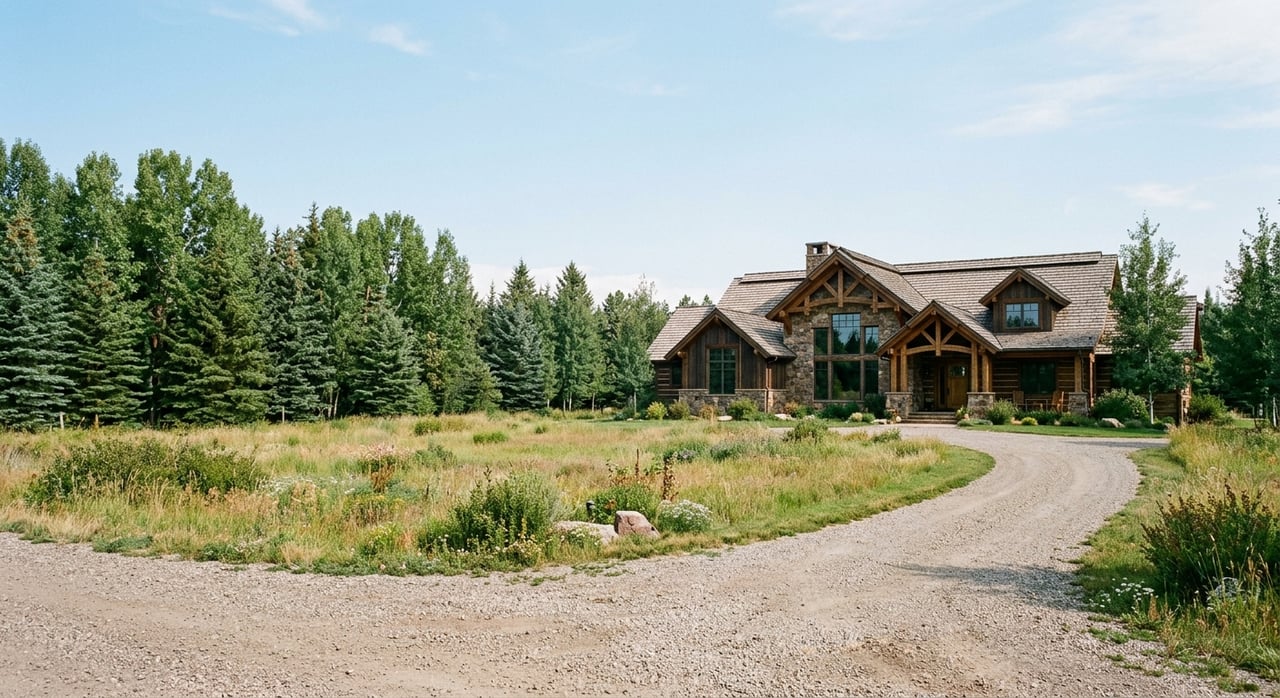
Based on the county code, Springhill is primarily oriented toward acreage, agricultural parcels, rural homesites, and ranch-style holdings. The zoning also allows certain uses tied to rural life, including barns, corrals, agricultural structures, and home occupations.
In the Agricultural and Rural Residential subdistrict, agriculture is intended to be the principal use, and residential uses are limited. The code also states that the district is meant to preserve rural homesites while preventing subdivision development as a permitted use.
That does not mean every property looks the same. It does mean you should expect a land-first environment where the parcel itself, its access, and its allowed uses can be just as important as the house.
Rural Residential Patterns
The AR rules allow one single-family dwelling unit per 160 acres, or per parcel that existed at the time of adoption or was created under the code, subject to development rights. This is one reason Springhill tends to feel less built out than many buyers expect when they first drive the area.
If you are shopping for land or an existing home, this is a key point. Future building potential, parcel history, and development rights review can all affect how a property fits your plans.
Public Lands and Community Uses
The Public Lands subdistrict is centered on uses like forestry, grazing, recreation, and public-land compatibility. It also allows uses such as guest ranches, stables and corrals, campgrounds, and cross-country ski facilities, with a minimum parcel size of 160 acres.
The Community Facilities and Institutions subdistrict covers uses like schools, churches, fire stations, and cemeteries, with a minimum parcel size of one acre. Together, these rules reinforce that Springhill is built around rural land uses and a small-scale community structure rather than urban services.
Access to Bozeman Still Matters
One of Springhill’s biggest strengths is that it feels rural without feeling remote. Springhill Road is the area’s main corridor, and local references place the area just north of Bozeman and off Exit 305.
That setup helps keep Springhill connected to the broader Bozeman region. If you need to get into town regularly, the location can make that practical while still giving you a noticeably different day-to-day living environment.
For regional travel, Bozeman Yellowstone International Airport is in Belgrade, about five miles northwest of Bozeman and just east of Belgrade. For many buyers, that balance between open land and regional access is a big part of the draw.
Some listing examples describe Springhill properties as roughly 10 to 15 minutes from downtown Bozeman, though those drive times are property-specific and should be treated as approximate. The real takeaway is simpler: Springhill stays in Bozeman’s orbit while offering a more rural setting.
Buyer Considerations in Springhill
If you are considering Springhill, due diligence matters. In a rural area like this, the most important questions often have less to do with finishes and more to do with land use, building constraints, and site readiness.
You will want to look closely at setbacks, septic feasibility, access, easements, covenants, and development rights. These are not minor details here. They shape what you can build, where you can place structures, and how easily a property can support your goals.
Setbacks Shape the Layout
Springhill’s setback rules are one reason properties keep that open, spread-out feel. The zoning code requires 50 feet from property lines, 125 feet from the centerline of Springhill Road, Springhill Community Road, Walker Road, Forswall Road, Gee Norman Road, and Corbly Gulch Road, and 80 feet from other public roads.
There are also water-related restrictions. Structures unrelated to water procurement must stay 50 feet from the high-water mark of streams or creeks. If you are thinking about building, expanding, or placing accessory structures, this can have a major impact on your usable building envelope.
Septic Comes Early in the Process
In Springhill, septic is not something to figure out later. The zoning regulation says septic systems must be located on suitable soils, and a septic permit must be issued or applied for before a land use permit is issued.
Gallatin County Health Services adds that a wastewater treatment system permit is required before installation. Site evaluations must be completed by a registered site evaluator or a Montana professional engineer, and current wastewater review timelines are around 40 days.
For a buyer, that means septic feasibility should be one of your first checkpoints, especially on vacant land. A beautiful parcel still needs to work from a practical and regulatory standpoint.
Building Standards Matter
Additional design standards also reinforce the country character. In the AR and PL subdistricts, non-agricultural dwellings and accessory structures are capped at 30 feet in height, dwellings must be at least 24 feet wide, and the code includes roof-pitch and foundation standards.
There are also screening requirements for waste containers and equipment. None of this is meant to discourage buyers. It simply means that planning, placement, and fit with the land matter more here than they would on a smaller in-town lot.
What to Check Before You Buy
If you are serious about Springhill, start with the practical questions that affect long-term use and value. A clear review upfront can save you time, money, and frustration later.
Here is a simple checklist to guide your early research:
- Confirm zoning subdistrict and allowed uses
- Review parcel history and any development rights questions
- Check setback impacts on building placement
- Investigate septic suitability and permit timing
- Understand road access and seasonal conditions
- Review easements, covenants, and water features
- Match the property to your actual lifestyle goals
That last point is especially important. Some buyers want a ready-to-enjoy home with more privacy, while others want land for future plans, agricultural use, or a legacy-style hold. Springhill can support different goals, but not every parcel supports every plan.
Springhill’s Community Character
Springhill is small, and its community structure reflects that. Gallatin County’s school district information lists Springhill Number 20 as a K-8 school at 6020 Springhill Community Road in Belgrade.
The zoning code also references limited services such as gravel roads, a one-room schoolhouse, and a volunteer fire department. That detail matters because it helps set expectations. Springhill offers a connected rural community feel, but it is not designed like a highly serviced suburban area.
For many people, that is the point. If you are drawn to a place where open space, agricultural roots, and a quieter pace still shape daily life, Springhill offers a version of country living that stays close to Bozeman without trying to become Bozeman.
Is Springhill Right for You?
Springhill makes the most sense if you want more land, more separation between properties, and a stronger sense of Montana’s rural edge. It is especially appealing if your property search includes acreage, views, agricultural flexibility, or a homesite that feels grounded in the landscape.
It may be less ideal if you want dense services, quick walkability to shops, or a simple subdivision-style purchase with fewer land-use variables. In Springhill, the tradeoff for space and openness is that you need to pay closer attention to property-specific details.
That is where local guidance can make a real difference. If you want help evaluating homes, acreage, or land opportunities in Springhill and the greater Bozeman area, connect with Brad Ehrnman Real Estate for practical, local insight tailored to how you want to live.
FAQs
What is Springhill like compared with Bozeman neighborhoods?
- Springhill is much more rural in feel, with zoning focused on agriculture, open space, and limited services rather than dense residential development.
What kinds of properties are common in Springhill?
- County regulations point toward acreage, agricultural parcels, rural homesites, ranch-style properties, and limited community or institutional sites.
What should buyers check first on a Springhill property?
- Start with septic feasibility, road access, setbacks, development rights, easements, and covenants because those issues strongly affect how a property can be used.
How close is Springhill to Bozeman?
- Springhill is just north of Bozeman along Springhill Road with access near I-90 Exit 305, keeping it connected to Bozeman for work, shopping, and services.
Why does Springhill feel so open and spread out?
- The local zoning code is designed to preserve agricultural land, rural homesites, scenic open space, and low-density development patterns.
Are building rules important in Springhill?
- Yes. Setbacks, septic requirements, height limits, and other design standards can all affect where and how you build or improve a property.