Wondering if a piece of land in Bridger Canyon is truly buildable, or just beautiful on paper? That is one of the biggest questions you should answer before you focus on price, views, or acreage. If you are thinking about buying land in this part of Gallatin County, a little upfront due diligence can save you time, money, and frustration later. Let’s walk through the key factors that matter most.
Why land buying is different
Buying land in Bridger Canyon is not the same as buying an existing home in town. With raw land, you need to confirm how you will access the property, where you can build, what approvals are required, and whether water, wastewater, and utilities will support your plans.
That matters in Bridger Canyon because parcel size alone does not tell the full story. A large tract may still have meaningful limits tied to zoning, setbacks, slopes, easements, or permit requirements.
Start with access first
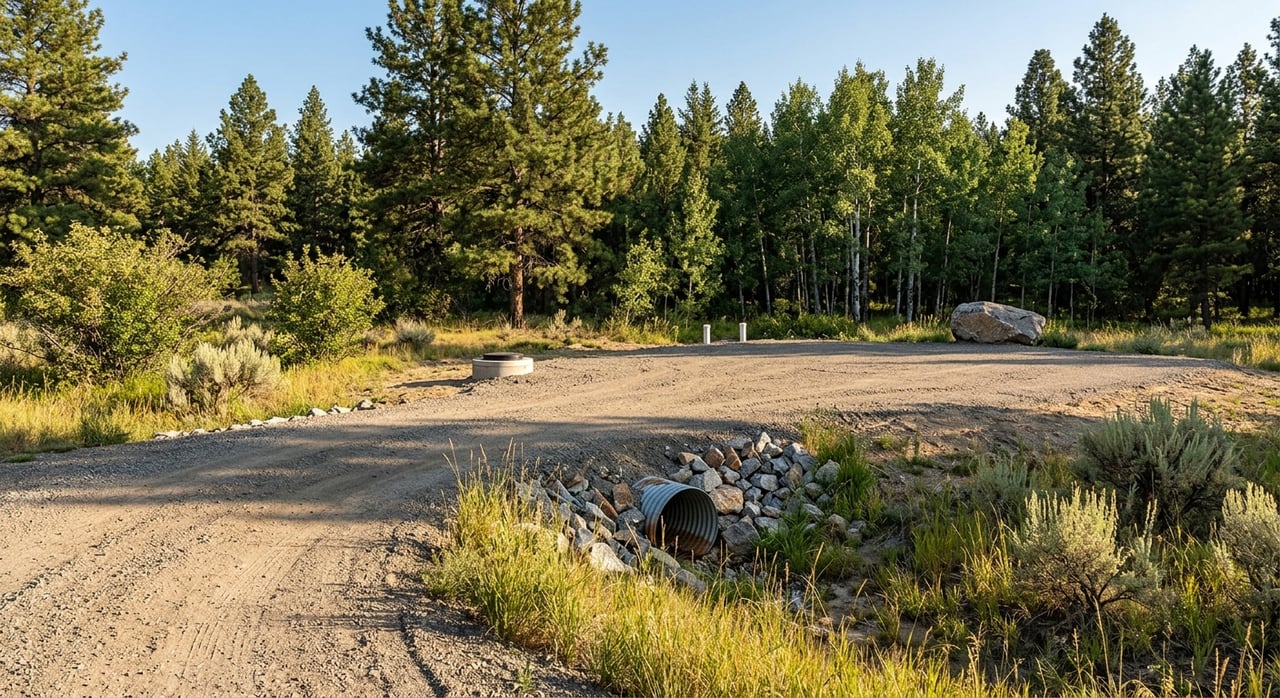
Before you get too far into pricing or design ideas, confirm how the property is legally and physically accessed. If a driveway will connect to a county-maintained road, Gallatin County requires a Road Access Permit, and work in county road right-of-way may also need separate review.
Access details can affect both your budget and your timeline. Gallatin County does not allow work in county-maintained road rights-of-way during winter after October 31 until spring thaw, and some roads may have 16-ton weight limits in spring and early summer.
Those seasonal rules can impact excavation, concrete work, and material deliveries. If you hope to start building quickly, this timing piece deserves early attention.
Narrow roads can change the plan
In parts of the Bridger Canyon corridor, MDT notes roadway widths of about 22 feet beyond Bridger Bowl. That is a practical reminder to think beyond everyday driving and ask whether large trucks, construction equipment, and delivery vehicles can reach the site safely.
You may also want to confirm whether there is enough room for pullouts, turnarounds, and staging. These details are easy to miss when you are focused on scenery, but they can become important once construction starts.
Private roads need extra review
If access is by an unnamed road or private lane, address assignment can become part of the process. Gallatin County notes that road names are required when three or more occupied structures are served from an unnamed road or driveway.
That does not always stop a purchase, but it is another example of why access should be verified early. What looks simple at first glance may involve added coordination later.
Verify zoning and allowed use
Bridger Canyon is within Gallatin County’s Bridger Canyon Zoning District, and the exact subdistrict matters. The county’s interactive mapper can help you research a parcel, but the official zoning map kept by the Clerk and Recorder is the final authority if there is any discrepancy.
This step is essential because uses are handled by district, not by general assumptions about rural land. Gallatin County states that land use permits are required in all zoning districts, and Bridger Canyon regulations are use-specific.
Do not assume acreage means flexibility
Some Bridger Canyon districts, including examples in RF and B-4, have a 40-acre minimum parcel size unless PUD provisions apply. In other words, buying a large parcel does not automatically mean it will be easier to divide or develop in the future.
That is especially important if you are buying with long-term plans in mind. If your goals include a future split, an additional dwelling scenario, or another specialized use, you should confirm what is actually allowed before moving forward.
Use matters more than many buyers expect
In the RF district, Gallatin County notes that one principal single-family dwelling on a conforming parcel, agriculture, and accessory buildings are allowed by right, while other uses require conditional-use approval. If you are considering overnight accommodations, recreational housing, or a short-term-rental-style use, the county says those uses appear only in specific Bridger Canyon subdistricts and may require conditional-use approval.
The takeaway is simple: match the parcel to your intended use, not the other way around. This is one of the most important land-buying decisions you will make.
Check setbacks and the buildable envelope
A parcel can look spacious and still have a much smaller usable building area than you expect. Setbacks, road buffers, watercourse protections, and hillside rules can all shrink the final buildable envelope.
One RF example in the Bridger Canyon regulations uses setbacks of 25 feet from property lines, 125 feet from a public road right-of-way or road easement, and 150 feet from the ordinary high-water mark of a watercourse. The same example also prohibits roads on cross slopes over 30 percent and buildings on slopes over 30 percent.
Terrain can limit your options
In mountain and foothill settings, topography is often one of the biggest design factors. A lot may have incredible views, but steep slopes and setback rules can narrow where the driveway, homesite, parking, and utilities can go.
That is why you should look at the parcel as a layout problem, not just a boundary map. A surveyor or land-use professional can help you understand how much usable space you really have.
Review deeds, plats, easements, and covenants
Before applying for permits, Gallatin County tells applicants to review the deed, plat or survey, recorded easements, county-enforced covenants, and other legal documents. Covenants tied to a property are also available through the Clerk and Recorder.
This part of due diligence matters because restrictions are not always obvious during a site visit. Easements, access rights, utility corridors, and covenant rules can shape what you can build and where.
Do water and septic homework early
Many land buyers leave water and wastewater questions until too late. In Bridger Canyon, that can create avoidable delays.
Private wells are common on raw land, and Gallatin County says private water supply quality is unregulated. The owner is responsible for safety, and wells should be checked every spring and tested annually for total coliform bacteria and nitrates.
Septic records can tell you a lot
Gallatin County’s wastewater records go back to January 1, 1966, and can be searched by owner, address, subdivision, COS number, lot, or section-township-range. If the parcel uses on-site septic, the county’s land use permit instructions require an approved septic permit before submittal.
The septic permit application also notes that a change in use or other modification may require review, and an Authorization to Construct is generally valid for 24 months. That is useful information if you are buying land now but planning to build later.
Water rights may need separate attention
If the property includes irrigation or you are considering a planned change to an existing water right, bring DNRC into the conversation early. DNRC states that changes to diversion, use, or storage require an application, and Gallatin County directs water-right and stream-permitting questions to DNRC in Bozeman.
This is one more reason land purchases benefit from a process-minded approach. The more moving parts you identify early, the better you can judge whether the property fits your goals.
Utility extensions should be part of due diligence
You should also ask whether power, internet, and utility easements are already in place or need extension. Gallatin County’s permit instructions ask applicants to account for easements and utility-related approvals during the process.
For many buyers, utility access is one of the biggest practical differences between a parcel that looks attractive and one that works for real life. It is worth getting clear answers upfront.
Build timeline matters in Bridger Canyon
Even if a parcel checks the right boxes, your timeline still matters. In Gallatin County, a Land Use Permit is required before construction of most structures, and the county says not to start permanent improvements before approval.
Processing generally takes a minimum of four weeks, and that timeline does not begin until all required information is received. If construction starts before approval, the county notes that the permit fee is doubled for after-the-fact processing.
Site readiness affects inspections
The county asks applicants to show the site plan, setbacks, driveways, parking, and wastewater approvals as part of the permit process. If the county cannot inspect the site because it is not staked, not plowed, or access is blocked, a revisit fee can apply.
That means timing is not just about paperwork. Seasonal site conditions can also affect how smoothly your project moves forward.
Other approvals may still apply
For properties outside Bozeman and Belgrade, Gallatin County does not issue building permits. The county FAQ directs buyers to the Montana State Building Codes Bureau for building, plumbing, and electrical permits, and county instructions note that other approvals may include fire-district review, water rights, stormwater, and HOA or covenant approvals.
A land purchase can absolutely be worthwhile, but it usually works best when you go in with a full picture of the approval path.
Temporary living during construction
If you plan to live on site while building, there is a specific rule worth knowing. Bridger Canyon allows a temporary dwelling unit for up to one year while the principal dwelling is under construction, but only after a permanent dwelling land use permit is approved and the temporary setup complies with water and sewage rules.
For some buyers, that flexibility can be helpful. Still, it is not a shortcut around the normal process, so it should be confirmed as part of your planning.
A practical buying checklist
Before you buy land in Bridger Canyon, make sure you can clearly answer these questions:
- Is there legal and workable access to the parcel?
- Will a driveway connection require a Road Access Permit?
- Are there seasonal road or delivery limits that could affect the build?
- What zoning subdistrict applies to the property?
- Is your intended use allowed by right, conditional, or not allowed?
- What setbacks, slope rules, and watercourse buffers affect the buildable area?
- Are there recorded easements, plats, surveys, or covenants that limit use?
- Is there a septic history, existing approval, or need for new wastewater review?
- Will a well, water testing, or water-right review be part of the process?
- Are power, internet, and utility easements already in place?
- Does your timeline fit Gallatin County’s permit process and seasonal constraints?
The big question to answer
In Bridger Canyon, the key question is not just what a parcel costs. It is whether the parcel has legal access, a workable buildable envelope, water and wastewater solutions, and a permit path that fits your intended use and timeline.
If you answer those questions early, you can make a more confident decision and avoid buying a property that creates surprises later.
If you are exploring land or acreage in Bridger Canyon and want a practical, local perspective on how a parcel may fit your goals, Brad Ehrnman Real Estate can help you think through the details with a clear, on-the-ground approach.
FAQs
What should you verify first when buying land in Bridger Canyon?
- Start with legal and physical access, including driveway permits, road conditions, and whether seasonal restrictions could affect construction or deliveries.
How do you confirm zoning for a Bridger Canyon land parcel?
- Use Gallatin County’s zoning tools to research the parcel, then verify the exact subdistrict against the official zoning map kept by the Clerk and Recorder.
Can a large parcel in Bridger Canyon always be divided later?
- No. Some Bridger Canyon districts include 40-acre minimum parcel size rules unless PUD provisions apply, so future division or development should be verified before purchase.
What utilities should you research before buying raw land in Bridger Canyon?
- Confirm whether the parcel has or can obtain water, septic approval, power, internet, and any needed utility easements.
Do you need a permit before building on land in Bridger Canyon?
- Yes. Gallatin County says a Land Use Permit is required before construction of most structures, and permanent improvements should not begin before approval.
Can you live on a Bridger Canyon property during construction?
- In some cases, yes. Bridger Canyon allows a temporary dwelling unit for up to one year while the main home is under construction, but only after the permanent dwelling permit is approved and water and sewage rules are met.