If you are eyeing a recreational property or ranch in Paradise Valley, it is easy to fall for the views first and ask hard questions later. That is completely understandable. This stretch of Park County offers a strong connection to the Yellowstone River corridor, big landscapes, and the kind of Montana lifestyle that draws buyers from near and far. The key is making sure the property works for how you actually plan to use it. In this guide, you will learn how to screen ranch and recreation properties in Paradise Valley with a practical, local lens so you can move forward with more clarity and confidence. Let’s dive in.
Start With Intended Use
Before you focus on finishes, river proximity, or the number of acres, get clear on your intended use. A property that works well for seasonal recreation may not fit your plans for livestock, irrigation, future structures, or income-producing improvements.
In Paradise Valley, that early clarity matters because county review can change depending on what you want to do with the land. Park County Planning administers zoning, floodplains, subdivisions, rural improvement districts, and review paths for certain buildings used for lease or rent. That means your use case should shape your due diligence from day one.
Ask These Use Questions Early
- Will you use the property mainly for recreation, ranching, or a mix of both?
- Do you want to build now, hold for later, or improve the property over time?
- Are you considering cabins, employee housing, or another income-producing structure?
- Could you want to split the land later?
- Will water be needed for domestic use, stock, irrigation, or all three?
If you may divide land in the future, Park County’s subdivision rules deserve early attention. The county defines a subdivision as creating one or more parcels under 160 acres or creating two or more RV or mobile-home spaces, and subdivision proposals require county commission review and approval after a pre-application meeting.
Know That Zoning Is Not One-Size-Fits-All
A common mistake in rural property searches is assuming county rules apply the same way everywhere. In Park County, zoning is not countywide and uniform. The county lists citizen-initiated zoning districts that include the Paradise Valley District and the US Hwy 89 S / East River Road / Old Yellowstone Trail District.
That matters because two properties with similar acreage and similar views may have different use limits depending on where they sit. If you are comparing parcels, zoning should be part of your first round of screening, not a late-stage surprise.
What To Verify About Local Rules
- Whether the parcel is in a zoning district
- Whether current and future uses align with district rules
- Whether there are subdivision-related limits tied to your plans
- Whether lease or rent regulations could apply to structures on the property
- Whether a rural improvement district affects the parcel
Rural improvement districts can fund roads, water, sewer, storm drain, parks, and recreational facilities through an additional tax on residents in the district. That may influence your long-term ownership costs, so it is worth checking before you write an offer.
Prioritize Access Before You Prioritize Amenities
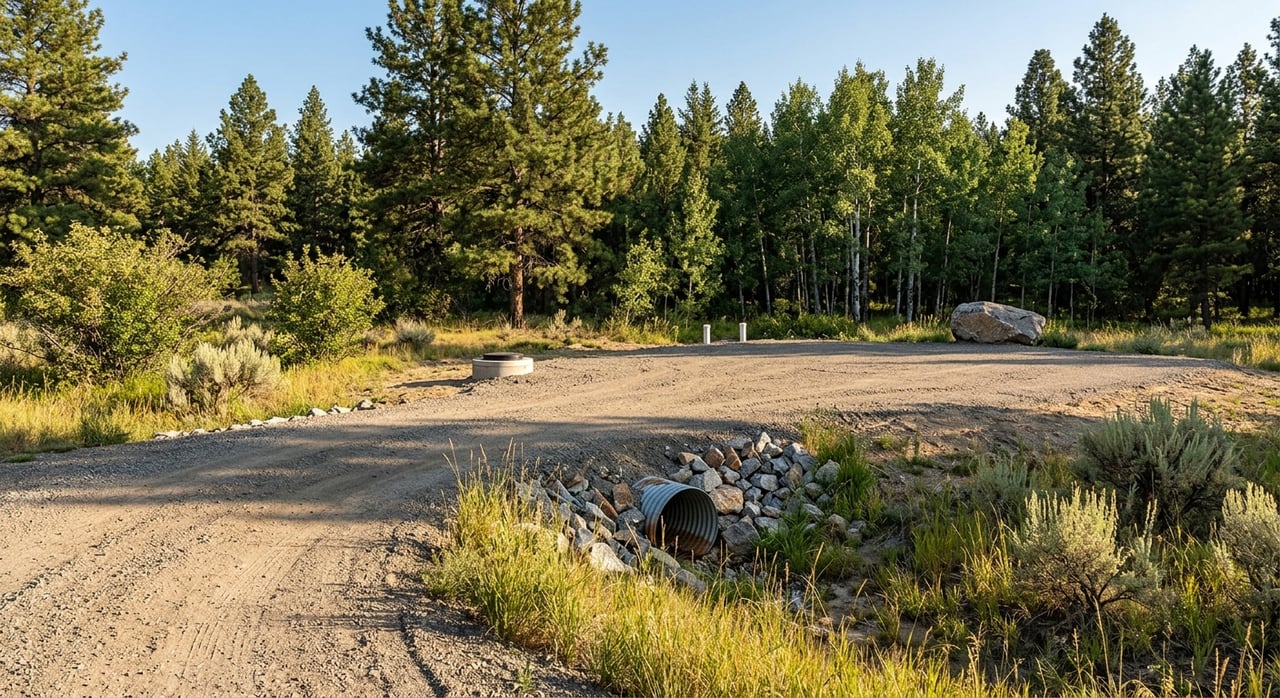
In a place like Paradise Valley, access can shape everyday use just as much as the land itself. A beautiful parcel loses some of its appeal if the road setup is unclear, maintenance is uncertain, or driveway work triggers additional approvals.
Park County Road & Bridge maintains hundreds of miles of county roads and requires a road work permit before work in the county right of way, including driveway approaches, utility service connections, snowplowing, and dust control. If a property sits on a private road or shared drive, you will also want to understand easements and maintenance responsibilities before moving forward.
Access Questions Worth Answering
- Is the road county-maintained or private?
- Is there a recorded easement for legal access?
- Is there a shared road maintenance agreement?
- Will future driveway or utility work require a county permit?
- Is the parcel easy to locate for delivery, service access, and emergency response?
Park County GIS also handles rural addressing and private road naming, which can matter for emergency response and everyday logistics. GIS maps and cadastral tools can also help you review parcel boundaries and nearby ownership before you assume a property offers the privacy or future flexibility you expect.
Check Boundaries and Neighboring Ownership
With ranch and recreation properties, boundary assumptions can create expensive misunderstandings. A fence line is not always the legal boundary, and what looks like open surrounding land may include a mix of public and private ownership.
Park County GIS web maps include atlas, wildlife, and zoning layers, and Montana’s cadastral system stores public and private land ownership information. Together, those tools are useful when you want to confirm where the parcel starts and ends, what sits next door, and whether your expectations about use or privacy match the record.
Boundary Review Can Help You Understand
- Parcel shape and legal configuration
- Adjacent land ownership
- Nearby wildlife-related map layers
- Access routes and private road relationships
- Whether improvements appear to sit where you think they do
For a buyer planning recreation, horses, or future improvements, these details are not small print. They are part of how the land will function in real life.
Treat Water Rights as a Separate Due Diligence Track
In Paradise Valley, water is often central to value and use. That is especially true if you are looking at ranch land, irrigated acreage, stock water needs, or a parcel near the river corridor.
Montana DNRC says a recorded water right is required for most uses of water, and new or expanded uses after June 30, 1973 may require a permit or qualifying exception. Just as important, a well log does not by itself prove a water right. Buyers should review rights tied to the parcel itself, not just rights connected to the current owner’s name.
Water Questions To Ask
- Does the parcel have a recorded water right?
- What uses are tied to that right?
- Are there rights for irrigation, stock water, recreation, or domestic use?
- Is there only a well log, or is there a documented right?
- Could future development or expanded use change the review path?
For smaller ranch parcels, water review should go hand in hand with land classification review. Montana classifies agricultural land based on ownership, size, and use. Parcels 160 acres or larger are agricultural land, while smaller parcels must meet production and income thresholds to qualify.
Pair Land Classification With Ranch Goals
If your purchase is partly about ranch use, do not look at acreage alone. Look at acreage, use, and classification together.
Montana’s Department of Revenue treats larger parcels differently than smaller ones when agricultural classification is in question. If you are buying under 160 acres and hope to use the property as a working ranch parcel, it is wise to understand how production and income thresholds may affect classification.
This does not mean every buyer needs the same strategy. It means your ranch goals, water rights, and property classification should be reviewed as one connected picture rather than three separate topics.
Review Well and Septic Records Carefully
A rural property is only as functional as its core systems. In Paradise Valley, that means taking a close look at water supply and onsite wastewater, especially if the property has older improvements or if you plan to change occupancy or use.
Montana DEQ notes that private wells are not regulated like public water systems, so buyers should plan on annual well check-ups and at minimum test for coliform bacteria and nitrates. DEQ also recommends testing after flooding, maintenance, or changes in water quality. On the septic side, Park County Environmental Health provides access to septic permits, regulations, licensed installers and site evaluators, and water sample information.
Focus On These System Checks
- Whether there is a septic permit on file
- Whether the system matches current use and occupancy
- Whether a licensed installer or site evaluator is documented
- Whether the well should be tested before closing
- Whether flood history could affect water quality or system performance
This is one of the most important areas for practical due diligence. A pretty setting does not reduce the need to verify the basics.
Take Floodplain Risk Seriously
Because Paradise Valley is closely tied to the Yellowstone River corridor, floodplain review is often one of the first screens that should happen. River access and water frontage can be appealing, but they can also affect what can be built, improved, repaired, or permitted.
Park County’s floodplain program is the local implementation of the National Flood Insurance Program, and the county advises buyers to check FEMA flood maps and existing floodplain files. The county also notes that work in or near streams may require additional permitting through the Park County Conservation District and the US Army Corps of Engineers.
Floodplain Review Should Cover
- Whether any part of the parcel sits in a mapped floodplain
- Whether existing structures are affected
- Whether planned improvements could trigger added review
- Whether streamside work may require additional permits
- Whether flooding could affect wells, septic, access, or build areas
For recreational and ranch buyers, floodplain review is not just about insurance or maps. It is about understanding how water may shape long-term use.
Be Careful With Lease or Rent Plans
Some buyers consider adding guest cabins, employee housing, or another income-producing building to offset ownership costs or support ranch operations. In Park County, that kind of plan can trigger a separate review path.
The county’s Buildings for Lease or Rent regulations review access, roads and easements, water and wastewater, solid waste, emergency services, and floodplain compliance. In other words, if you plan to create lease or rent space, the county is looking at the whole property system, not just the building itself.
That is an important distinction in Paradise Valley, where a parcel may feel spacious but still have practical limits tied to access, services, or environmental constraints. If lease or rent use is part of your vision, bring that up early in the process.
Build the Right Due Diligence Team
Ranch and recreational purchases often involve more moving parts than a standard in-town home purchase. In Paradise Valley, those moving parts commonly include access, water rights, floodplain review, septic records, well testing, and zoning.
Because those issues follow different county and state review tracks, buyers usually benefit from coordinating with the right professionals early. Depending on the property, that can include a surveyor, a septic evaluator, a well tester, and a water-rights specialist.
A Practical Buyer Checklist
- Confirm intended use before touring too many properties
- Check zoning district status and applicable rules
- Verify road type, legal access, and maintenance obligations
- Review parcel maps, boundaries, and adjacent ownership
- Search for recorded water rights tied to the parcel
- Review land classification if ranch use is part of the plan
- Pull septic permit records and evaluate current system fit
- Test the well and review water quality needs
- Check floodplain maps and county floodplain files
- Ask early about lease or rent review if income use is planned
The more complex the property, the more valuable it is to stay organized. A clear process helps you compare opportunities based on facts, not just scenery.
If you are considering a recreational property or ranch in Paradise Valley, a grounded local approach can save time and help you avoid costly assumptions. The goal is not to make the process feel complicated. It is to make sure the land, access, water, and use potential line up with the way you want to live and invest in Montana. When you understand those pieces early, you can make a better decision with far more confidence.
If you want a practical, place-based perspective on Paradise Valley acreage, ranch, or recreational opportunities, connect with Brad Ehrnman Real Estate.
FAQs
What should you check first when buying recreational land in Paradise Valley?
- Start with intended use, zoning status, access, water rights, and floodplain exposure so you know whether the property fits your goals before you get too far into the process.
What does access due diligence mean for a Paradise Valley ranch property?
- It means confirming whether the road is county-maintained or private, verifying legal easements, understanding maintenance responsibilities, and checking whether future road or driveway work may need county permits.
Why do water rights matter for Paradise Valley ranch and recreational purchases?
- Water rights affect how water can legally be used on the property, including domestic use, irrigation, stock water, and recreation, and a well log alone does not prove a water right.
How do floodplains affect property use in Paradise Valley?
- Floodplain location can influence building plans, improvements, repairs, streamside work, and the performance of systems like wells, septic, and access routes.
What county records should you review before buying rural property in Park County?
- Review zoning information, subdivision status if relevant, rural improvement district details, septic permits, floodplain files, GIS parcel maps, and any available records tied to access or lease-and-rent use.
When can a Paradise Valley property trigger subdivision review?
- Park County defines a subdivision as creating one or more parcels under 160 acres or creating two or more RV or mobile-home spaces, and proposals require county review and approval after a pre-application meeting.